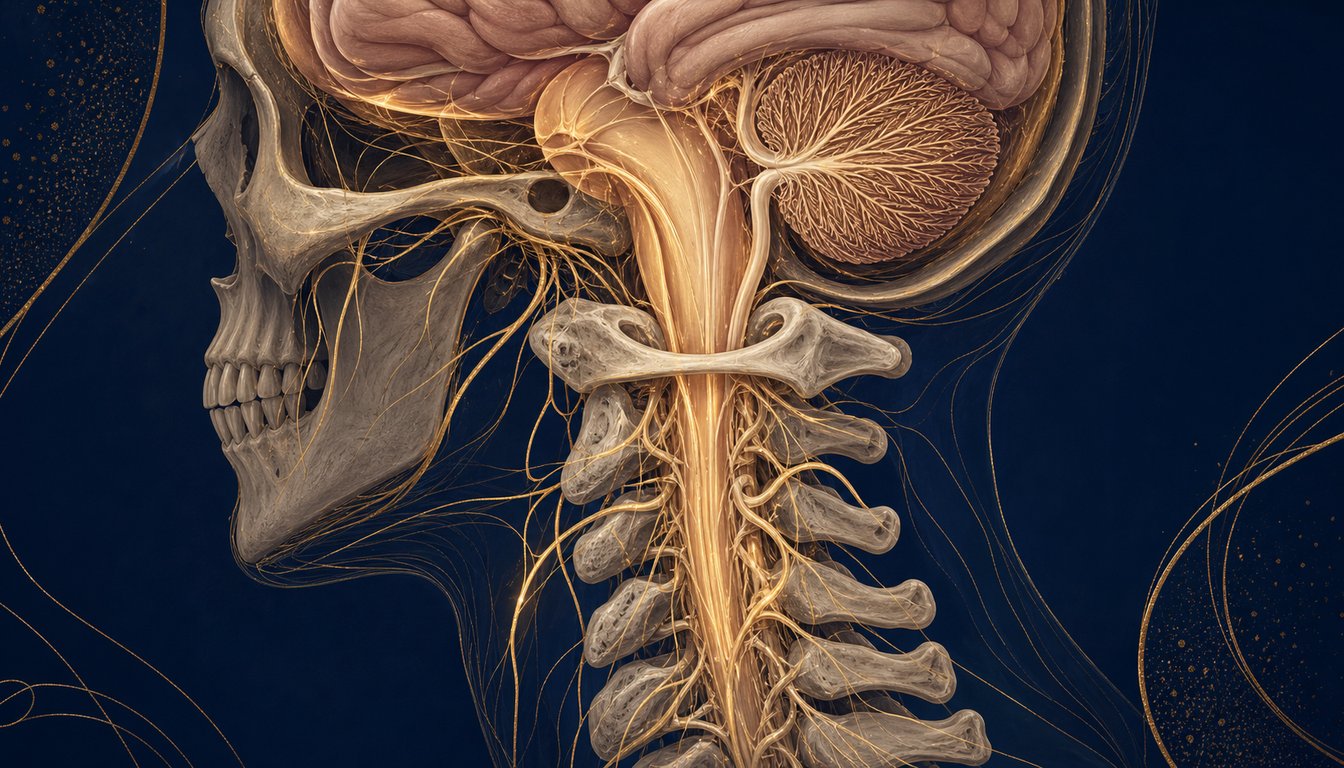
Understanding shoulder pain patterns and their mechanical triggers enables practical, trackable progress through targeted chiropractic care and lifestyle adjustments.
Shoulder pain that does not resolve with rest, ice, and stretching usually involves more than the shoulder itself. Cervical spine dysfunction, thoracic posture, and scapular mechanics all influence shoulder function, and addressing only the painful joint often produces temporary relief followed by recurrence. Chiropractic care evaluates the full kinetic chain from the neck through the shoulder girdle to identify and correct the specific dysfunctions driving your pain. For patients in The Woodlands, TX whose shoulder problems have lingered, this guide explains what a comprehensive evaluation reveals and how measurable progress is tracked.
Why Does Shoulder Pain Often Come Back After Treatment?
Shoulder pain recurs because the structures that influence shoulder mechanics extend well beyond the glenohumeral joint. The shoulder functions as part of a kinetic chain that includes the cervical spine, thoracic spine, scapulothoracic articulation, acromioclavicular joint, and sternoclavicular joint. Dysfunction at any point in this chain alters loading patterns at the shoulder.
Common upstream problems that perpetuate shoulder pain include:
- Cervical spine misalignment, C4-C7 segmental dysfunction can refer pain to the shoulder and deltoid region through shared nerve pathways, and altered cervical posture increases mechanical load on the shoulder girdle
- Thoracic kyphosis, excessive rounding of the upper back tips the scapulae forward, narrowing the subacromial space where the rotator cuff tendons pass, which is the primary mechanism of impingement syndrome
- Scapular dyskinesis, abnormal scapular movement patterns force the rotator cuff to compensate, creating overuse and eventual breakdown
- First rib restriction, a common and frequently overlooked finding that alters the scalene muscles, brachial plexus, and thoracic outlet, creating shoulder and arm symptoms
Treating the shoulder in isolation while these upstream dysfunctions persist is why many patients cycle through cortisone injections, physical therapy courses, and activity modifications without achieving lasting resolution.
How Does Chiropractic Care Address Shoulder Pain Differently?
Chiropractic evaluation examines the entire shoulder kinetic chain to identify every contributing dysfunction, not just the site of maximum pain. At Prince Health in The Woodlands, the assessment includes:
- Cervical spine evaluation, segmental palpation, range of motion testing, and orthopedic provocation tests to identify referred pain patterns and nerve involvement
- Thoracic spine assessment, mobility testing of the upper and mid-thoracic segments that directly influence scapular position and shoulder mechanics
- Scapular function testing, observing scapular movement during arm elevation to detect dyskinesis patterns
- Shoulder-specific examination, rotator cuff integrity testing, impingement signs, labral provocation tests, and acromioclavicular joint assessment
- First rib and thoracic outlet screening, ruling out rib restriction and neurovascular compression that mimic primary shoulder pathology
This comprehensive approach identifies the complete list of contributing factors rather than focusing narrowly on the painful structure.
What Chiropractic Techniques Are Used for Shoulder Pain?
Treatment is matched to the specific findings from the evaluation:
Spinal adjustments: Cervical and thoracic adjustments restore proper segmental motion and improve the biomechanical foundation that the shoulder depends on. Specific techniques used include diversified adjustments, Activator Method for patients who prefer low-force correction, and drop-table technique for thoracic segments.
Active Release Technique (ART): This hands-on soft tissue method breaks up adhesions in the rotator cuff muscles, biceps tendon, upper trapezius, scalenes, and pectoral muscles that develop from chronic tension and repetitive strain.
Graston Technique: Instrument-assisted soft tissue mobilization targets fibrotic tissue in the supraspinatus, infraspinatus, and subscapularis tendons, as well as the deltoid fascia and thoracic paraspinal muscles.
Joint mobilization: Graded mobilization of the glenohumeral joint, acromioclavicular joint, and sternoclavicular joint restores accessory gliding motions that are essential for full, pain-free range of motion.
Rehabilitative exercise: Progressive strengthening of the rotator cuff, scapular stabilizers, and thoracic extensors addresses the muscular deficits that allowed the dysfunction to develop. Exercises are prescribed with specific sets, reps, and progression criteria.
What Are Common Irritation Triggers for Shoulder Pain?
Identifying and modifying irritation triggers is as important as the treatment itself because continuing to provoke the damaged structures slows recovery and causes recurrence. Common triggers include:
- Sleeping on the affected side, compresses the subacromial space for hours and impairs circulation to the rotator cuff tendons
- Overhead reaching and lifting, loads the rotator cuff at its most vulnerable position, particularly when combined with thoracic kyphosis
- Desk and computer posture, sustained forward head and rounded shoulder position tightens anterior structures and weakens posterior stabilizers
- Driving with hands at 10 and 2, prolonged shoulder elevation activates the upper trapezius and can irritate an inflamed supraspinatus
- Reaching behind the back, combines internal rotation, extension, and adduction, which maximally stresses the posterior capsule and subscapularis
Modifying these triggers during the treatment period accelerates recovery. Your clinician identifies which specific activities are most problematic for your shoulder pattern and provides practical alternatives.
How Is Progress Measured in Chiropractic Shoulder Treatment?
Measurable progress replaces subjective "feeling better" assessments with objective data points that confirm structural and functional improvement. At Prince Health, shoulder treatment progress is tracked through:
- Range of motion measurements, goniometric measurement of flexion, abduction, external rotation, and internal rotation at each visit, compared to baseline and to the unaffected side
- Strength testing, manual muscle testing of individual rotator cuff muscles and scapular stabilizers, graded on a standardized 0-5 scale
- Functional benchmarks, specific activities like reaching overhead, putting on a jacket, lifting a gallon of water, or sleeping through the night without waking from pain
- Orthopedic test findings, retesting provocation tests that were positive at initial evaluation to confirm that the underlying dysfunction is resolving
- Pain location and behavior, tracking whether pain has centralized, reduced in frequency, or changed in character, all of which indicate healing progression
This data-driven approach ensures that treatment continues only as long as measurable progress is being made, and it provides documentation of improvement that patients can share with other providers if needed.
What Results Can You Expect and How Long Does Treatment Take?
Most patients with shoulder pain see measurable improvement within the first two to four weeks of consistent chiropractic care. The typical timeline varies by diagnosis:
- Impingement syndrome: 4 to 8 weeks for significant improvement with concurrent postural correction and scapular rehabilitation
- Rotator cuff tendinopathy: 6 to 12 weeks depending on severity, with progressive strengthening beginning at week 3 to 4
- Frozen shoulder (adhesive capsulitis): 8 to 16 weeks with aggressive joint mobilization, often significantly faster than the natural history of 12 to 36 months without intervention
- Cervicogenic shoulder pain: 2 to 4 weeks when the primary driver is cervical dysfunction rather than shoulder pathology itself
Treatment frequency typically starts at two to three visits per week during the acute correction phase and reduces as measurable improvement occurs.
Get Expert Shoulder Care at Prince Health in The Woodlands
Prince Health is located at 10847 Kuykendahl Rd #350, The Woodlands, TX. Our team evaluates the full kinetic chain from the cervical spine through the scapula to the shoulder joint, identifies every contributing dysfunction, and tracks your progress with objective measurements at every visit. If shoulder pain has persisted despite previous treatment, a comprehensive chiropractic evaluation often reveals the missing pieces.
Frequently Asked Questions
Can chiropractic care fix a rotator cuff tear?
Chiropractic care cannot surgically repair a torn rotator cuff tendon, but it can significantly reduce pain and improve function in patients with partial tears by correcting the biomechanical factors that stress the rotator cuff, releasing adhesions in surrounding soft tissue, and strengthening compensatory muscles. Many patients with partial tears achieve satisfactory function through conservative care without surgery.
How many chiropractic visits are needed for shoulder pain?
Most shoulder conditions require 8 to 16 visits over 4 to 12 weeks, depending on the diagnosis, severity, and how many contributing factors are involved. Some patients with primarily cervical-driven shoulder pain improve significantly within 4 to 6 visits. Treatment plans are adjusted based on measurable progress at each re-evaluation.
Should I get an MRI before starting chiropractic treatment for shoulder pain?
An MRI is not always required before beginning treatment. A thorough physical examination can identify the clinical pattern and initiate treatment for most shoulder conditions. MRI is recommended when examination findings suggest a significant structural tear, when symptoms are not responding as expected, or when surgical consultation may be needed. Your clinician advises on imaging based on clinical findings.
Can poor posture cause shoulder pain?
Yes. Forward head posture and rounded shoulders are among the most common contributors to shoulder pain, particularly impingement syndrome. This posture tips the scapulae forward, narrows the subacromial space, and forces the rotator cuff to work against a mechanical disadvantage. Correcting thoracic posture and scapular position is often essential for lasting shoulder pain relief.
Is chiropractic care safe for shoulder pain after surgery?
Chiropractic care is safe and often beneficial following shoulder surgery once surgical healing has progressed to a stage where manual therapy is appropriate. The timeline varies by procedure: most patients can begin gentle chiropractic care for the cervical and thoracic spine within weeks of surgery, with direct shoulder treatment beginning per the surgeon's rehabilitation protocol. Coordination with the surgical team ensures appropriate timing.
Schedule an Appointment Today
Get optimized and highly effective care for your condition by visiting our office in The Woodlands, TX.