This educational guide explores how regenerative medicine addresses persistent shoulder pain from rotator cuff irritation and tendon issues. It examines pain patterns, conservative treatment options, and when regenerative approaches may support recovery alongside structured rehabilitation planning.
Shoulder pain from rotator cuff irritation, tendon degeneration, or partial tears is one of the most common reasons patients seek alternatives to cortisone injections and surgery. Regenerative medicine offers a biologically driven approach that targets the damaged tissue itself, using the body's own healing mechanisms to promote repair rather than simply masking pain. This guide covers which shoulder conditions respond best, what treatments are available, and what realistic recovery looks like.
How Does Regenerative Medicine Treat Shoulder Pain?
Traditional shoulder treatments focus on symptom management. Cortisone reduces inflammation temporarily, physical therapy strengthens surrounding muscles, and surgery repairs or replaces damaged structures. Regenerative medicine takes a different approach by delivering concentrated biological factors directly to the site of injury to stimulate tissue repair at the cellular level.
The primary regenerative medicine modalities used for shoulder conditions include:
Platelet-rich plasma (PRP) concentrates the growth factors and signaling molecules from your own blood into a preparation that is injected into the damaged tendon or joint. These platelets release growth factors including PDGF, TGF-beta, and VEGF that recruit repair cells and stimulate collagen production.
Stem cell therapy uses mesenchymal stem cells, typically derived from bone marrow concentrate or donor tissue sources, to support tissue regeneration in areas with limited natural healing capacity. These cells can differentiate into tendon, cartilage, and other connective tissue types.
Prolotherapy involves injecting a dextrose solution into damaged ligaments and tendons to trigger a controlled inflammatory response that stimulates the body's natural repair cascade.
Each approach has specific indications, and the choice depends on the type and severity of shoulder damage.
Which Shoulder Conditions Respond Best to Regenerative Treatments?
Not every shoulder problem is equally suited to regenerative approaches. The best candidates have identifiable soft tissue damage with sufficient residual tissue integrity for biological repair to enhance.
Conditions with strong response profiles:
- Partial-thickness rotator cuff tears, the most common indication for regenerative shoulder treatment. PRP and stem cell therapy can support healing in tears that have not progressed to full-thickness rupture
- Rotator cuff tendinopathy, chronic tendon degeneration without acute tear responds well to PRP, which delivers growth factors that reverse the degenerative cascade
- Biceps tendinopathy, the long head of the biceps tendon is vulnerable to chronic irritation, and regenerative injections can support healing without the morbidity of surgical tenotomy
- Labral fraying and partial tears, mild to moderate labral damage may respond to biologic treatment, particularly when combined with rehabilitation
- Shoulder osteoarthritis, PRP injections into the glenohumeral joint can reduce inflammation and support cartilage preservation in early to moderate osteoarthritis
Conditions with limited regenerative potential:
- Full-thickness rotator cuff tears with significant retraction
- Massive multi-tendon tears with fatty infiltration of the muscle
- Advanced bone-on-bone shoulder arthritis
- Acute fractures or dislocations requiring structural stabilization
What Happens During a Regenerative Shoulder Treatment?
The treatment process is straightforward and performed in an outpatient setting. A typical session includes:
Preparation: For PRP, a blood draw is performed and processed in a centrifuge to concentrate platelets. For stem cell therapy, bone marrow may be aspirated from the posterior iliac crest under local anesthesia, then concentrated. This preparation phase takes 15 to 30 minutes.
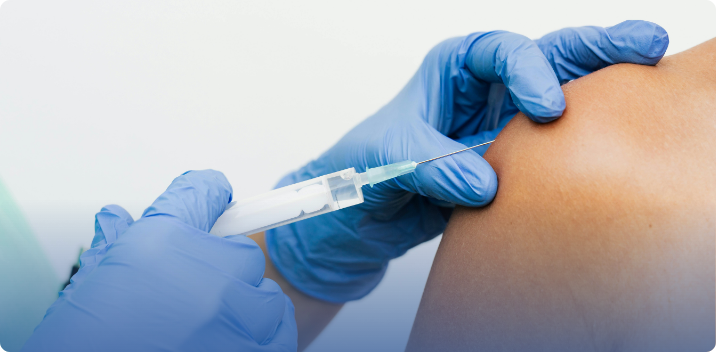
Image-guided injection: Using diagnostic ultrasound, the clinician guides the needle precisely to the damaged structure. Ultrasound guidance is critical because accuracy of placement directly affects outcomes. A blind injection into the general shoulder area is significantly less effective than a precisely targeted delivery.
Post-procedure: The shoulder is typically rested from strenuous activity for 1 to 2 weeks. Unlike cortisone, which requires avoiding activity because it weakens tissue, regenerative treatments require rest to allow the healing cascade to initiate without disruption.
The entire procedure takes 45 to 90 minutes depending on the modality and complexity.
How Long Does Recovery Take After Regenerative Shoulder Treatment?
Recovery from regenerative shoulder treatment follows a different pattern than patients expect from cortisone or surgery. The initial weeks may not bring obvious improvement because the biological repair process must first establish itself before functional gains appear.
Week 1-2: Rest from overhead activity and heavy lifting. Gentle pendulum exercises and range of motion work to prevent stiffening. Mild soreness at the injection site is normal and expected.
Week 3-6: Gradual reintroduction of strengthening exercises. Many patients begin noticing reduced pain with daily activities. The regenerative cascade is actively producing new collagen and vascular tissue.
Week 6-12: Progressive loading of the shoulder through structured rehabilitation. This is the critical window where new tissue matures and gains tensile strength. Patients who rush this phase risk disrupting the healing process.
Month 3-6: Continued tissue remodeling. Most patients report their most significant improvements between months 3 and 6. Return to full activity including overhead sports is typically appropriate during this window.
Some patients require a second treatment at the 6 to 8 week mark based on imaging reassessment and clinical progress.
How Does Regenerative Treatment Compare to Cortisone for Shoulders?
Cortisone injections remain the most commonly prescribed intervention for shoulder pain, but growing evidence highlights important limitations:
Short-term relief: Cortisone provides rapid pain reduction, often within 48 hours. Regenerative treatments require weeks to months for maximum benefit.
Tissue effects: Cortisone has been shown to weaken tendon collagen and accelerate degeneration with repeated use. A 2019 study in the American Journal of Sports Medicine found that patients receiving multiple cortisone injections had higher rates of subsequent rotator cuff tear. Regenerative medicine promotes the opposite effect, tissue strengthening and repair.
Duration: Cortisone relief typically lasts 4 to 12 weeks before symptoms return. Regenerative treatments aim to produce lasting structural improvement that persists beyond the treatment period.
Surgical implications: Repeated cortisone injections may compromise tissue quality, making future surgical repair more difficult. Regenerative treatments preserve and enhance tissue integrity.
For patients with acute, severe inflammation who need rapid relief, cortisone has clear value. But for chronic tendon degeneration, partial tears, and patients seeking long-term solutions, regenerative approaches offer a fundamentally different trajectory.
Get a Regenerative Shoulder Evaluation at Prince Health in The Woodlands
If shoulder pain from rotator cuff irritation, tendon degeneration, or partial tears has not responded to conventional treatment, a regenerative medicine evaluation can clarify whether biologic therapy is appropriate for your specific condition. At Prince Health, located at 10847 Kuykendahl Rd #350, The Woodlands, TX, we use diagnostic ultrasound to assess tissue damage, identify the optimal regenerative approach, and deliver image-guided treatments with precision.
Frequently Asked Questions
Can PRP heal a torn rotator cuff?
PRP can support healing in partial-thickness rotator cuff tears by delivering concentrated growth factors directly to the injury site. It promotes collagen production and tissue remodeling. Full-thickness tears with significant retraction typically require surgical repair, though PRP is sometimes used as an adjunct to enhance post-surgical healing.
How many regenerative treatments are needed for shoulder pain?
Most patients receive one to two treatments spaced 6 to 8 weeks apart. The number depends on the severity of damage, the modality used, and the healing response observed at follow-up. Some patients achieve significant improvement after a single treatment, while others benefit from a structured series.
Is regenerative medicine for shoulders covered by insurance?
Most insurance plans do not cover PRP or stem cell therapy for shoulder conditions because these treatments are considered investigational by many carriers. Prince Health provides transparent pricing during consultation and can discuss payment options including HSA and FSA eligibility.
How soon can I return to exercise after a PRP shoulder injection?
Light daily activities can typically resume within a few days. Structured exercise rehabilitation begins at 2 to 3 weeks. Return to overhead sports and heavy lifting is generally appropriate at 3 to 6 months, depending on the severity of the initial injury and the clinical response to treatment.
Does regenerative shoulder treatment hurt?
The injection involves local anesthesia to minimize discomfort. Most patients describe the procedure as mildly uncomfortable rather than painful. Post-procedure soreness at the injection site is common for 3 to 5 days and is managed with ice and acetaminophen. Anti-inflammatory medications like ibuprofen are typically avoided because they can interfere with the regenerative process.
Schedule an Appointment Today
Get optimized and highly effective care for your condition by visiting our office in The Woodlands, TX.