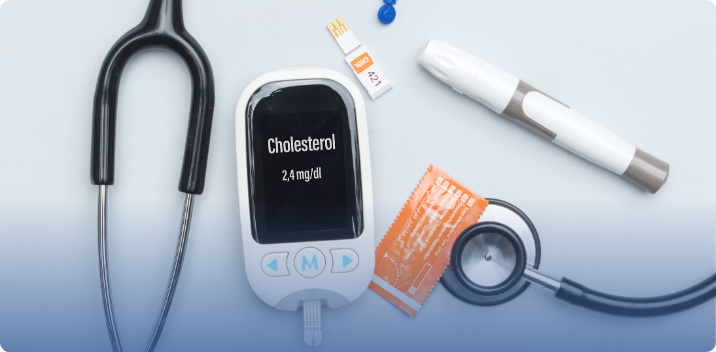
High cholesterol often reflects multiple factors beyond diet, including genetics, liver metabolism, insulin signaling, and stress physiology. A functional medicine approach identifies the primary drivers of elevated cholesterol and creates measurable plans tailored to individual circumstances.
High cholesterol management that begins and ends with a statin prescription overlooks the metabolic complexity that determines whether elevated lipids actually translate to cardiovascular risk. Functional medicine evaluates the full picture: particle size, inflammatory load, insulin status, and liver metabolism to build a cholesterol strategy grounded in your individual biochemistry rather than population averages. For patients in The Woodlands, TX whose cholesterol numbers have triggered concern, this guide explains what advanced testing reveals and how a smarter framework changes decision-making.
Why Is Standard Cholesterol Testing Incomplete?
A conventional lipid panel measures total cholesterol, LDL-C, HDL-C, and triglycerides, but these values alone do not accurately predict cardiovascular risk for every patient. The limitations are well-documented:
- LDL-C measures cholesterol content, not particle number. Two patients with identical LDL-C values can have vastly different numbers of LDL particles. The patient with more particles (higher LDL-P or ApoB) carries significantly greater risk because each particle is a potential contributor to plaque formation.
- Particle size matters. Small, dense LDL particles penetrate arterial walls more readily than large, buoyant particles. A standard panel cannot distinguish between these patterns.
- Triglyceride-to-HDL ratio is a better predictor of insulin resistance and cardiovascular risk than LDL-C in many populations, but it is rarely used as the primary decision-making metric.
- Lipoprotein(a) is a genetically determined, highly atherogenic particle that standard panels do not measure. Approximately 20% of the population has elevated Lp(a), and it is one of the strongest independent risk factors for early cardiovascular disease.
At Prince Health in The Woodlands, cholesterol evaluation starts with advanced lipid testing that reveals what a standard panel cannot.
What Does Advanced Lipid Testing Include?
Advanced lipid panels provide a granular view of your lipid metabolism that transforms generic recommendations into targeted interventions. Key markers include:
- ApoB (Apolipoprotein B), the single best measure of atherogenic particle burden. Each atherogenic lipoprotein carries one ApoB molecule, making it a direct count of particles that can deposit in arterial walls.
- LDL particle number (LDL-P), measures the total number of LDL particles regardless of cholesterol content. High LDL-P with normal LDL-C is called discordance and identifies patients at hidden risk.
- LDL particle size distribution, identifies whether your LDL pattern is predominantly large and buoyant (Pattern A, lower risk) or small and dense (Pattern B, higher risk).
- Lipoprotein(a), a genetically fixed particle that is unaffected by diet or statin therapy but significantly modifies cardiovascular risk assessment.
- Oxidized LDL, measures the fraction of LDL that has undergone oxidative modification, which is the form most actively taken up by macrophages in the arterial wall to form foam cells and plaque.
- VLDL and remnant cholesterol, triglyceride-rich lipoproteins increasingly recognized as independent contributors to atherogenesis.
These markers, combined with inflammatory and metabolic testing, create a comprehensive risk profile that guides treatment decisions far more precisely than total cholesterol or LDL-C alone.
How Does Insulin Resistance Affect Cholesterol?
Insulin resistance is the metabolic engine behind the most common dyslipidemia pattern in the Western world: elevated triglycerides, low HDL, and a predominance of small dense LDL particles. This triad, often called atherogenic dyslipidemia, carries substantially more cardiovascular risk than isolated LDL elevation.
The mechanism is straightforward. When cells resist insulin, the liver overproduces VLDL particles to export excess triglycerides. These triglyceride-rich particles exchange their triglycerides for cholesterol esters with LDL and HDL particles through CETP-mediated transfer. The result is triglyceride-enriched LDL that hepatic lipase converts to small, dense LDL particles, and triglyceride-enriched HDL that gets cleared faster, reducing HDL levels.
This entire dyslipidemia pattern is driven by metabolic dysfunction, not dietary cholesterol or saturated fat in most cases. Addressing insulin resistance through carbohydrate reduction, exercise, and metabolic optimization often improves all three components simultaneously, sometimes more effectively than statin therapy for this specific lipid phenotype.
Should Everyone with High Cholesterol Take a Statin?
No, and the answer depends on what is driving the elevation and what your total risk profile looks like. Statins are effective at reducing LDL-C, ApoB, and cardiovascular events in specific populations, particularly:
- Patients with established cardiovascular disease (secondary prevention)
- Patients with very high LDL-C (above 190 mg/dL) suggestive of familial hypercholesterolemia
- Patients with diabetes and elevated cardiovascular risk
- Patients with high coronary artery calcium scores
For primary prevention in lower-risk individuals, the decision is more nuanced. The absolute risk reduction from statins in primary prevention is modest, often reducing the 10-year risk of a cardiovascular event by 1 to 2 percentage points. This matters because it means treating 100 patients for 10 years to prevent 1 to 2 events, while all 100 are exposed to potential side effects.
Functional medicine does not take an anti-statin position. It takes a data-driven position: use advanced testing to determine actual risk, implement lifestyle and nutritional interventions that address root causes, and add pharmaceutical therapy when objective data supports it.
What Nutritional Strategies Improve Cholesterol Profiles?
Dietary interventions that improve lipid profiles work primarily by reducing insulin resistance, lowering inflammation, and supporting liver metabolism rather than by limiting dietary cholesterol intake. The most effective strategies include:
- Reducing processed carbohydrates and refined sugars, this directly reduces hepatic VLDL production and shifts LDL particle size from small dense to large buoyant
- Increasing soluble fiber intake, psyllium, oat beta-glucan, and legumes reduce cholesterol reabsorption in the gut by 5 to 15%
- Omega-3 fatty acid optimization, EPA and DHA reduce triglycerides, improve endothelial function, and reduce inflammatory markers
- Plant sterols and stanols, these compounds block cholesterol absorption and can reduce LDL by 6 to 15% when consumed consistently
- Berberine, a plant compound that activates AMPK and has been shown in clinical trials to reduce LDL-C and triglycerides comparably to low-dose statins
- Red yeast rice, contains naturally occurring monacolins that inhibit HMG-CoA reductase, the same enzyme targeted by statin drugs
Functional medicine evaluation identifies which specific mechanisms are driving your cholesterol elevation so dietary and supplement recommendations target the right pathways.
How Do You Monitor Progress Beyond Standard Cholesterol Numbers?
Effective cholesterol management tracks metabolic improvements, not just LDL-C reduction. Meaningful progress markers include:
- ApoB trending downward, confirms that atherogenic particle burden is decreasing
- Triglyceride-to-HDL ratio improving, a ratio below 2.0 correlates with predominantly large LDL particles and improved insulin sensitivity
- Fasting insulin normalizing, confirms that the metabolic driver of dyslipidemia is being addressed
- Inflammatory markers declining, reduced hs-CRP and homocysteine indicate lower vascular inflammation
- Coronary artery calcium stability, no progression on follow-up imaging indicates effective risk management
These markers provide a multi-dimensional view of cardiovascular risk that a single LDL-C number cannot capture.
Get a Smarter Cholesterol Plan at Prince Health
Prince Health is located at 10847 Kuykendahl Rd #350, The Woodlands, TX. Our functional medicine team uses advanced lipid testing, metabolic evaluation, and targeted nutritional strategies to build cholesterol management plans matched to your individual biochemistry. If standard treatment has focused exclusively on your LDL number without evaluating particle size, inflammatory status, or metabolic health, a comprehensive assessment provides the clarity needed for better decisions.
Frequently Asked Questions
Is high cholesterol always dangerous?
Not necessarily. Total cholesterol and even LDL-C levels do not predict cardiovascular risk in isolation. What matters is the number and type of atherogenic particles, the degree of arterial inflammation, and the presence of metabolic dysfunction. Some patients with elevated total cholesterol have low actual risk when advanced markers are favorable, while others with normal-range LDL carry significant hidden risk.
Can you lower cholesterol naturally without medication?
Many patients achieve clinically meaningful cholesterol improvements through dietary modification, exercise, targeted supplementation, and metabolic optimization. The likelihood of success depends on what is driving the elevation. Insulin resistance-driven dyslipidemia often responds dramatically to lifestyle intervention, while genetic conditions like familial hypercholesterolemia typically require pharmaceutical support.
How long does it take for lifestyle changes to affect cholesterol?
Most patients see measurable lipid improvements within 8 to 12 weeks of consistent dietary and lifestyle changes. Some markers like triglycerides and HDL respond faster, while LDL particle size shifts may take three to six months to fully manifest. Follow-up advanced lipid testing is typically scheduled at the 12-week mark.
What is the difference between LDL cholesterol and LDL particle number?
LDL-C measures the total amount of cholesterol carried within LDL particles. LDL-P counts the actual number of LDL particles in the blood. Two patients can have identical LDL-C but very different LDL-P values, and it is the particle number that more accurately predicts cardiovascular risk. When LDL-C and LDL-P disagree, LDL-P is the more reliable risk indicator.
Does functional medicine replace my cardiologist?
No. Functional medicine works alongside conventional cardiology to provide a more complete evaluation and treatment approach. Advanced testing and root-cause investigation complement the monitoring and pharmaceutical management your cardiologist provides. Communication between providers ensures coordinated care and informed decision-making.
Schedule an Appointment Today
Get optimized and highly effective care for your condition by visiting our office in The Woodlands, TX.