Migraines often follow predictable patterns when you track the right inputs. This guide explores commonly overlooked triggers from nervous system load and neck tension to sleep debt and environmental factors.
Migraines are more than bad headaches. They involve light sensitivity, sound sensitivity, nausea, brain fog, and sometimes visual disturbances that can shut down an entire day. Most migraine sufferers know their obvious triggers: red wine, strong perfume, or lack of sleep. But the triggers that keep migraines recurring often operate below the radar. Understanding the hidden inputs that push your nervous system past its threshold is the key to reducing frequency, not just managing episodes after they start. For patients in The Woodlands, this guide covers the overlooked triggers and how chiropractic treatment at Prince Health fits into a comprehensive migraine management plan.
What Are the Most Commonly Missed Migraine Triggers?
The triggers most people miss are not dramatic. They are cumulative stressors that individually seem harmless but collectively push the nervous system past its tolerance threshold. Think of your migraine threshold like a cup that fills up from multiple sources. No single drop causes the overflow, but the combination does.
Here are the triggers that clinicians see patients overlook most frequently:
- Irregular meal timing: Skipping meals or eating at inconsistent times causes blood sugar fluctuations that sensitize the nervous system. This is different from specific food triggers.
- Jaw clenching and teeth grinding: Many people clench without realizing it, especially during concentration or sleep. This creates sustained tension in the temporomandibular joint and surrounding muscles that radiates into the head.
- Screen posture and forward head position: Hours of looking at screens with the head pushed forward adds compressive load to the cervical spine. This is pervasive among professionals in The Woodlands who commute and work at desks.
- Barometric pressure changes: Weather shifts in the Gulf Coast region, including humidity swings and storm fronts, are documented migraine triggers that patients often dismiss.
- Dehydration patterns: Not acute dehydration, but chronic mild under-hydration from coffee-heavy mornings and insufficient water throughout the day.
- Weekend headaches: Sleeping in on weekends disrupts your circadian rhythm and can trigger migraines in people whose nervous systems depend on routine.
- Medication overuse: Taking over-the-counter pain relievers more than two to three days per week can paradoxically cause rebound headaches that fuel the migraine cycle.
How Neck and Spine Alignment Affects Migraines
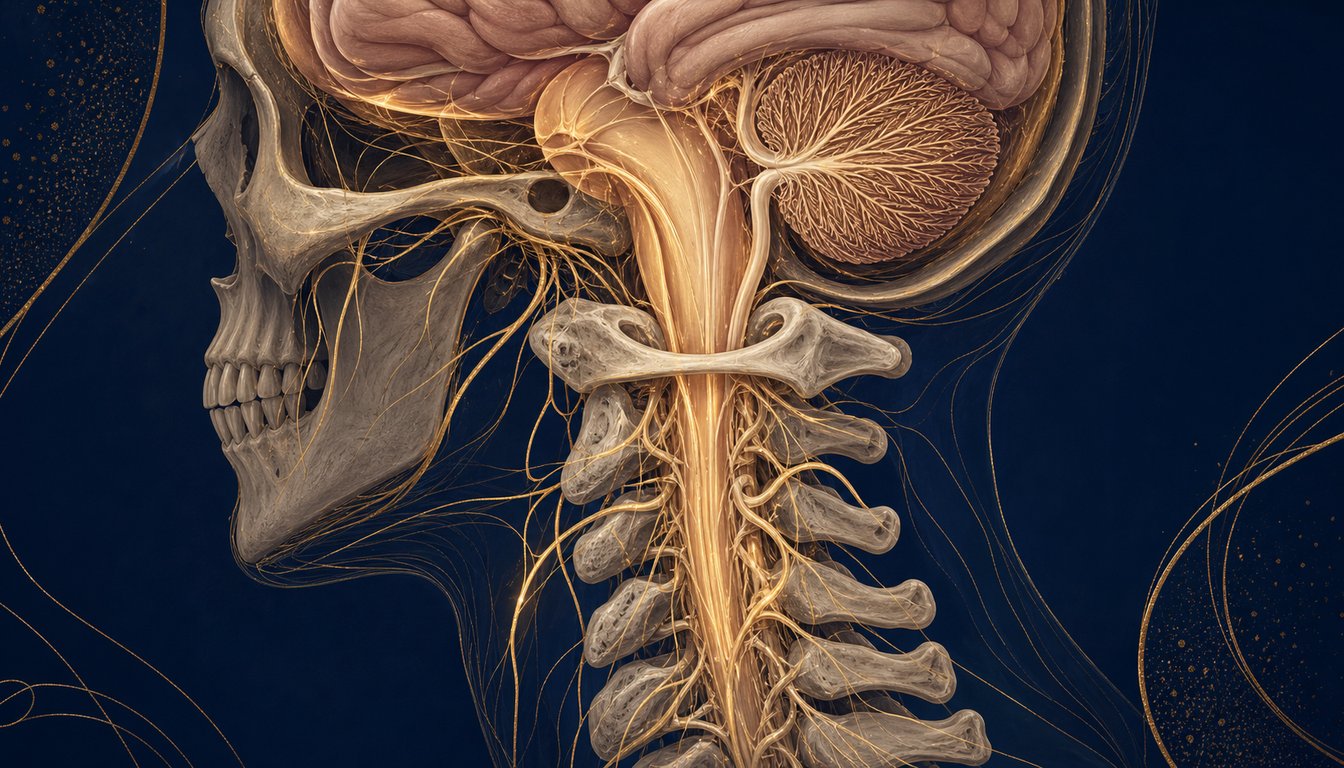
The cervical spine is one of the most overlooked contributors to migraine frequency. The upper neck, particularly the C1-C3 vertebrae, houses dense nerve pathways that connect directly to the trigeminal nucleus, the primary pain processing center involved in migraines.
When the cervical spine is misaligned, restricted, or carrying excessive muscle tension, it creates a constant low-grade input into the trigeminal system. This does not cause migraines by itself, but it lowers the threshold, meaning less additional stimulus is needed to trigger an episode.
Common cervical contributors include:
- Upper cervical misalignment affecting C1 (atlas) and C2 (axis) joint mechanics
- Chronic muscle tension in the suboccipital muscles at the base of the skull
- Restricted cervical mobility that forces compensatory movement patterns
- Forward head posture that increases compressive load by up to 40 pounds
- Prior whiplash or neck injury that altered joint mechanics years ago
Many patients are surprised to learn that their migraine pattern improved significantly after their cervical spine was properly evaluated and treated, even when they did not consider neck pain to be a primary complaint.
Can Stress and Sleep Patterns Trigger Migraines?
Absolutely, and they are among the most powerful triggers. The relationship between stress, sleep, and migraines operates through the autonomic nervous system, which regulates your body's fight-or-flight and rest-and-digest balance.
Stress does not trigger migraines only during high-pressure moments. Many patients report migraines during the letdown period after stress, such as weekends, vacations, or the evening after a demanding workday. This happens because the nervous system shifts rapidly from sympathetic activation to parasympathetic recovery, and that transition can trigger vascular changes in the brain.
Sleep disruption is equally potent. Both too little and too much sleep can trigger episodes. The critical factor is consistency. Going to bed and waking up at the same time every day, including weekends, is one of the most effective migraine prevention strategies available.
Key sleep-related patterns to watch:
- Waking with migraines suggests overnight jaw clenching or sleep apnea
- Migraines after sleeping in on weekends suggest circadian rhythm sensitivity
- Inability to sleep during a migraine prodrome (pre-attack phase) suggests autonomic activation
Dietary Triggers Most People Do Not Track
Beyond the well-known culprits like aged cheese, chocolate, and red wine, several dietary patterns escape detection because they are not about specific foods:
- Meal timing is often more important than meal content. Fasting or erratic eating destabilizes blood sugar and sensitizes the nervous system.
- Histamine load accumulates. Fermented foods, cured meats, and leftover proteins all contain histamine. A single serving may be fine, but stacking histamine-rich foods across multiple meals can cross the threshold.
- Artificial sweeteners, particularly aspartame, are documented migraine triggers for sensitive individuals.
- Caffeine withdrawal is one of the most reliable triggers. If you drink coffee daily and miss your usual dose by even a few hours, withdrawal can initiate an episode.
- Alcohol acts through multiple mechanisms: dehydration, histamine release, and sulfite content. Different types of alcohol trigger different people.
Keeping a food-and-symptom diary for 30 days is one of the most effective self-assessment tools. The pattern usually reveals itself within two to three weeks.
How Does Chiropractic Care Help with Migraines?
Chiropractic treatment for migraines focuses on reducing the cervical and neuromuscular inputs that lower your migraine threshold. When the upper cervical spine moves properly and the surrounding muscles are not chronically contracted, the trigeminal system receives less provocation.
At Prince Health in The Woodlands, migraine-focused chiropractic care may include:
- Upper cervical adjustments to restore proper C1-C3 joint mechanics using precise, low-force techniques
- Active Release Technique (ART) for chronic muscle tension in the suboccipital, sternocleidomastoid, and upper trapezius muscles
- Graston Technique for fascial adhesions in the neck and shoulder region
- Postural correction protocols targeting forward head position and desk-related strain
- Nervous system assessment to identify patterns of sympathetic dominance that amplify migraine susceptibility
A 2019 systematic review published in Musculoskeletal Science and Practice found that spinal manipulation was associated with reduced migraine frequency and intensity, with effects comparable to some preventive medications and fewer side effects.
Chiropractic care works best as part of a comprehensive approach that also addresses sleep, stress, hydration, and dietary triggers. The goal is not just treating episodes but raising the threshold so they happen less often.
Creating a Migraine Management Plan in The Woodlands
Effective migraine management requires identifying your specific trigger stack and systematically reducing inputs. Here is a practical starting framework:
- Track your triggers for 30 days using a headache diary (apps like Migraine Buddy work well)
- Prioritize sleep consistency with fixed bed and wake times seven days a week
- Get your cervical spine evaluated to identify mechanical contributors
- Standardize meal timing with meals every three to four hours
- Audit your medication use and address any overuse patterns
- Manage stress load through structured recovery practices, not just willpower
Prince Health is located at 10847 Kuykendahl Rd #350, The Woodlands, TX. Our team takes a threshold-based approach to migraines that combines cervical spine assessment with practical lifestyle strategies to reduce episode frequency.
Frequently Asked Questions
What is the number one trigger for migraines?
Stress is the most commonly reported migraine trigger, cited by approximately 70% of migraine sufferers. However, stress rarely acts alone. It typically combines with sleep disruption, dehydration, hormonal fluctuations, or cervical tension to push past the threshold. Identifying your specific combination matters more than finding a single cause.
Can a chiropractor help with chronic migraines?
Yes. Clinical evidence supports chiropractic care, particularly upper cervical manipulation and soft tissue treatment, for reducing migraine frequency and intensity. A 2019 systematic review found outcomes comparable to preventive medications. Chiropractic care is most effective when integrated with lifestyle modifications addressing sleep, stress, and dietary triggers.
How do you identify your migraine triggers?
The most reliable method is a 30-day headache diary tracking sleep, meals, stress, weather, physical activity, and cervical symptoms alongside migraine episodes. Patterns typically emerge within two to three weeks. Your clinician can help interpret the data and prioritize which triggers to address first based on their likely impact.
Can neck problems cause migraines?
Yes. The upper cervical spine connects directly to the trigeminal nucleus, the brain's primary migraine pain processing center. Cervical misalignment, chronic muscle tension, and restricted mobility create sustained input into this system that lowers the migraine threshold. Many patients experience significant migraine reduction after cervical treatment even when neck pain was not their primary complaint.
When should you see a doctor for migraines?
Seek evaluation if migraines occur more than four times per month, do not respond to over-the-counter medication, are getting worse over time, or are accompanied by new neurological symptoms such as visual changes, weakness, or speech difficulty. Sudden severe headaches unlike any you have experienced before warrant immediate medical attention.
Schedule an Appointment Today
Get optimized and highly effective care for your condition by visiting our office in The Woodlands, TX.