Learn how to distinguish between migraines and tension headaches by noticing pain patterns, triggers, and accompanying symptoms. Practical guidance on when to seek professional evaluation for recurring head pain.
Headaches affect nearly everyone at some point, but knowing whether you are dealing with a migraine or a tension headache changes everything about how you manage it. Migraines and tension headaches have different mechanisms, triggers, and treatment strategies, and misidentifying one as the other often leads to ineffective care and prolonged suffering. This guide helps you distinguish between the two and know when professional evaluation is warranted.
How Do Migraines and Tension Headaches Feel Different?
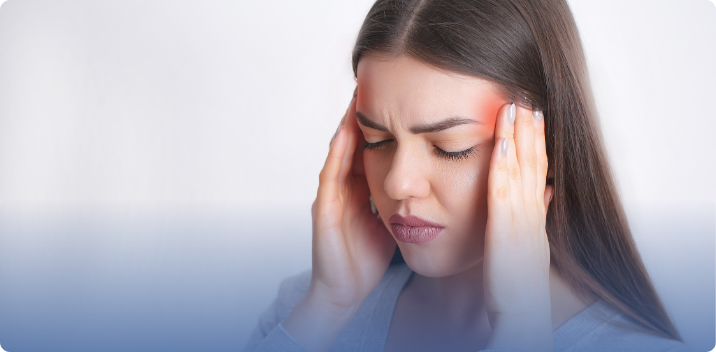
Tension headaches produce a dull, pressing, band-like sensation around the forehead, temples, or back of the head. The pain is typically bilateral (both sides), mild to moderate in intensity, and does not worsen with routine physical activity. Patients often describe it as feeling like a tight band or vice around the head.
Migraines produce moderate to severe throbbing or pulsating pain, usually on one side of the head, though bilateral migraines occur in about 40% of cases. The pain intensifies with movement, light, sound, or routine physical activity. Migraines frequently come with associated symptoms that tension headaches do not:
- Nausea and vomiting, present in approximately 80% of migraine episodes
- Photophobia and phonophobia, sensitivity to light and sound that drives patients to seek dark, quiet rooms
- Aura, visual disturbances, tingling, or speech difficulties preceding the headache in about 25% of migraine patients
- Prodrome symptoms, mood changes, food cravings, neck stiffness, or fatigue hours before the headache begins
The key distinguishing factor is disability. Tension headaches are uncomfortable but rarely prevent you from functioning. Migraines are frequently debilitating, forcing patients to stop activities and rest.
What Causes Each Type of Headache?
Understanding the underlying mechanisms helps explain why these headaches respond to different interventions:
Tension headache mechanisms:
- Sustained contraction of the pericranial muscles (temporalis, frontalis, trapezius, suboccipital muscles)
- Myofascial trigger points in the cervical and upper thoracic musculature
- Central sensitization from chronic peripheral muscle tension
- Postural strain, particularly forward head posture and upper crossed syndrome
- Stress-mediated increases in muscle tone via the sympathetic nervous system
Migraine mechanisms:
- Cortical spreading depression, a wave of neuronal depolarization across the cortex that triggers aura and activates trigeminal pain pathways
- Trigeminovascular system activation releasing CGRP (calcitonin gene-related peptide), substance P, and other inflammatory neuropeptides
- Central sensitization that amplifies pain processing in the brainstem
- Genetic predisposition affecting ion channels and neurotransmitter regulation
- Cervical spine dysfunction contributing to trigeminocervical nucleus activation
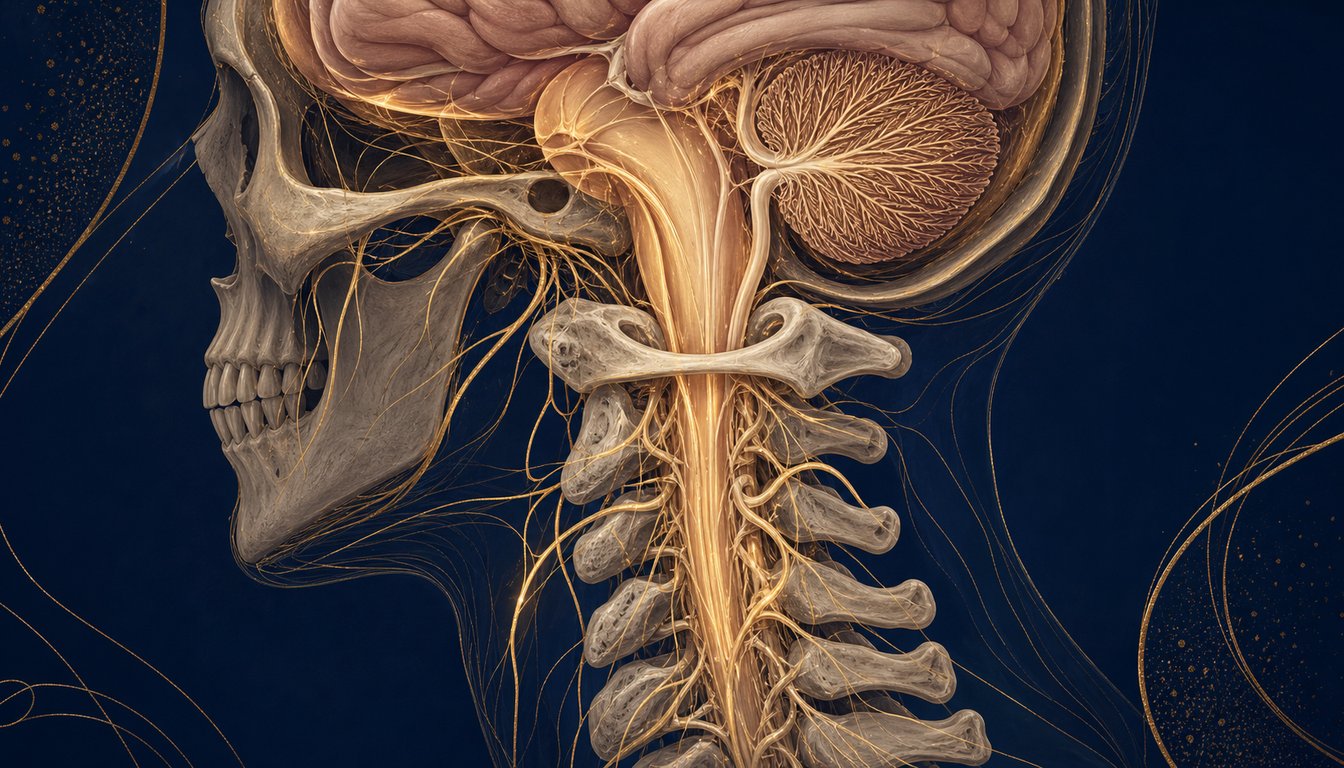
Notably, the cervical spine plays a role in both headache types. The trigeminocervical nucleus in the upper spinal cord receives convergent input from both the trigeminal nerve (face and head) and the upper cervical nerve roots (C1-C3). This anatomical convergence means cervical dysfunction can trigger or worsen both tension headaches and migraines.
What Triggers Should You Track?
Identifying personal triggers is one of the most effective strategies for reducing headache frequency. Common triggers differ between the two types:
Tension headache triggers:
- Prolonged screen time and poor ergonomics
- Emotional stress and anxiety
- Sleep deprivation or irregular sleep schedule
- Jaw clenching and teeth grinding (bruxism)
- Dehydration
Migraine triggers:
- Hormonal fluctuations (menstruation, oral contraceptives)
- Specific foods (aged cheese, red wine, processed meats, artificial sweeteners)
- Weather and barometric pressure changes
- Disrupted sleep patterns (too little or too much sleep)
- Strong sensory stimuli (bright lights, strong odors, loud sounds)
- Missed meals or prolonged fasting
A headache diary tracking frequency, duration, intensity, associated symptoms, and potential triggers over 4 to 8 weeks provides invaluable diagnostic data. Many patients discover patterns they were not consciously aware of.
How Does Chiropractic Care Address Headaches?
The cervical spine's role in headache pathophysiology makes chiropractic treatment a logical and evidence-supported intervention for both headache types:
For tension headaches, cervical and upper thoracic adjustments reduce muscle hypertonicity, restore segmental mobility, and decrease afferent pain signaling from the cervical spine. A 2011 study in the Journal of Manipulative and Physiological Therapeutics found that spinal manipulation was as effective as amitriptyline for chronic tension headache management with fewer side effects.
For migraines, upper cervical adjustments targeting C1-C2 can modulate trigeminocervical nucleus activity, reducing the frequency and intensity of migraine episodes. Research published in the European Journal of Neurology demonstrated reduced migraine days and medication use in patients receiving cervical spine manipulation.
Additional manual therapy approaches include:
- Suboccipital release techniques targeting the rectus capitis and obliquus muscles
- Myofascial trigger point therapy for the upper trapezius, levator scapulae, and SCM
- Postural retraining to reduce chronic cervical strain
- TMJ assessment and management when jaw dysfunction contributes to headache patterns
When Should Headaches Prompt Professional Evaluation?
Most headaches are benign, but certain features warrant prompt professional assessment:
- Thunderclap headache, sudden, severe onset reaching maximum intensity within seconds (rule out subarachnoid hemorrhage)
- New headache pattern after age 50, requires evaluation for temporal arteritis and secondary causes
- Progressive headache that worsens over days to weeks, may indicate increased intracranial pressure
- Headache with fever, stiff neck, and rash, suggests possible meningitis
- Headache following head trauma, requires concussion evaluation
- Headaches occurring more than 15 days per month, classified as chronic daily headache and requires specialized management
- Medication overuse, using acute headache medications more than 10 to 15 days monthly can cause rebound headaches
Any headache that is qualitatively different from your usual pattern deserves evaluation. Patients who have experienced headaches for years develop a sense of their normal pattern. A departure from that pattern is clinically significant.
Get Headache Treatment at Prince Health in The Woodlands
Chronic headaches do not have to be a permanent part of your life. At Prince Health, located at 10847 Kuykendahl Rd #350, The Woodlands, TX, we evaluate headache patients with thorough cervical spine assessment, neurological screening, and trigger identification. Whether you are dealing with chronic tension headaches, recurrent migraines, or a mixed pattern, our approach addresses the structural and functional contributors rather than relying solely on medication management.
Frequently Asked Questions
Can you have migraines and tension headaches at the same time?
Yes. Mixed headache patterns are common, and some patients experience a chronic tension-type headache baseline with superimposed migraine episodes. The cervical spine often plays a role in both, which is why addressing cervical dysfunction can improve both headache types simultaneously.
How often are migraines considered chronic?
Chronic migraine is defined as 15 or more headache days per month for at least 3 months, with at least 8 of those days meeting criteria for migraine. This distinction matters because chronic migraine requires a preventive treatment strategy rather than relying solely on acute medication.
Do chiropractors treat migraines effectively?
Multiple clinical studies support chiropractic care for migraine management, particularly when cervical spine dysfunction is present. Spinal manipulation targeting the upper cervical region has been shown to reduce migraine frequency, duration, and medication use. It is most effective as part of a comprehensive approach that includes trigger management and lifestyle modification.
Can dehydration cause migraines?
Dehydration is a recognized migraine trigger. Even mild dehydration can lower the threshold for migraine onset in susceptible individuals. Studies suggest that increasing daily water intake by 1 to 1.5 liters can reduce migraine frequency and duration in patients who are inadequately hydrated.
What is the difference between a headache and a migraine?
A headache is a general term for pain in the head. A migraine is a specific neurological condition with characteristic features including moderate to severe unilateral throbbing pain, nausea, light and sound sensitivity, and in some cases visual aura. Migraines involve specific pathophysiology including trigeminovascular system activation and cortical spreading depression.
Schedule an Appointment Today
Get optimized and highly effective care for your condition by visiting our office in The Woodlands, TX.