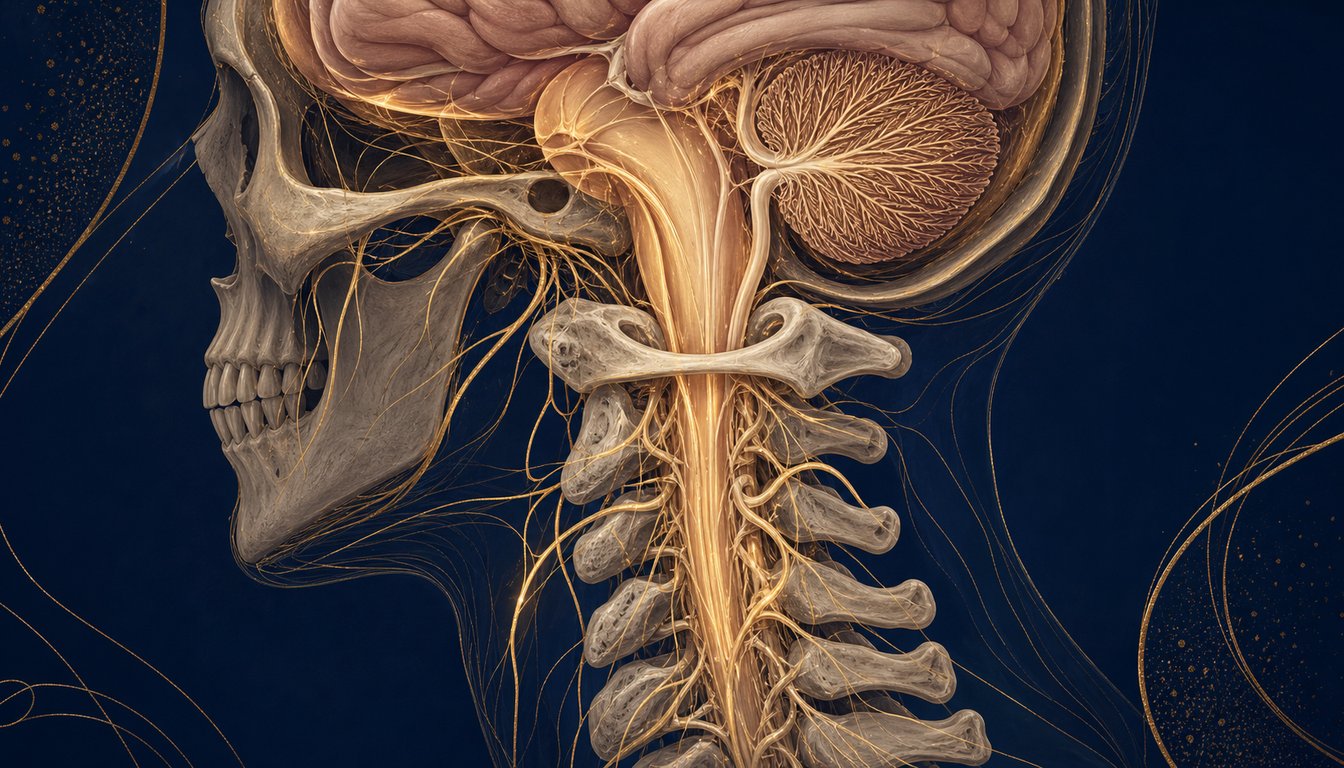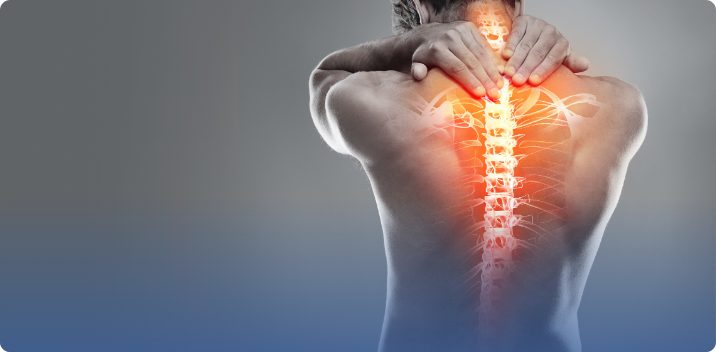
Understanding where your back pain is located -- upper, middle, or lower -- can reveal which structures are under stress and which approaches may help most.
Where your back pain is located tells a clinician more than most patients realize. The upper, middle, and lower regions of the spine have different structural characteristics, movement demands, and vulnerability patterns. Identifying the location of your pain is the first step toward understanding its cause and choosing the right treatment approach. This guide explains what each back pain region reveals and when to seek professional care.
What Does Upper Back Pain Usually Indicate?
The upper back, or thoracic spine (T1-T4), is structurally supported by the rib cage, which limits its mobility but provides significant stability. Because of this structural reinforcement, upper back pain is less commonly caused by disc herniation and more often related to muscular and postural dysfunction.
Common causes of upper back pain include:
Postural overload from prolonged forward head and rounded shoulder positioning. The upper trapezius, rhomboids, and levator scapulae become chronically overworked as they fight gravity to prevent the head and shoulders from drifting further forward.
Myofascial trigger points in the upper trapezius and rhomboid muscles produce local pain and referred pain patterns into the neck, head, and between the shoulder blades.
Thoracic facet joint irritation from sustained postures or repetitive movements. The facet joints in the upper thoracic region can become restricted or inflamed, producing localized pain that worsens with rotation and extension.
Costovertebral joint dysfunction where the ribs articulate with the thoracic vertebrae. Irritation at these joints causes sharp, localized pain that may worsen with deep breathing or twisting.
Upper back pain responds well to chiropractic treatment because the primary drivers, joint restriction, muscular tension, and postural dysfunction, are directly addressable through manual therapy and corrective exercise.
What Causes Middle Back Pain?
The middle thoracic spine (T5-T8) serves as the transition zone between the more mobile upper thoracic and lower thoracic regions. It bears significant compressive load while maintaining the thoracic kyphosis curve. Middle back pain is commonly associated with:
Thoracic disc degeneration, while less common than cervical or lumbar disc issues, thoracic discs can degenerate and cause localized pain. True thoracic disc herniation is rare but can produce both local and radiating symptoms.
Costovertebral and costotransverse joint dysfunction is particularly common in the mid-thoracic region. These joints can become restricted or inflamed, producing band-like pain that wraps around the rib cage.
Scheuermann's disease is a developmental condition where the anterior vertebral bodies develop wedging during adolescence, creating an exaggerated thoracic kyphosis. Adults with Scheuermann's may experience chronic mid-back pain and stiffness.
Visceral referral, mid-back pain can occasionally be referred from internal organs including the gallbladder, stomach, and pancreas. Pain that does not change with movement or position, is associated with eating, or accompanies gastrointestinal symptoms warrants medical evaluation beyond musculoskeletal assessment.
T4 syndrome is an under-recognized condition where dysfunction at the T4 vertebral segment produces diffuse arm pain, paresthesia in the hands, and headaches. It is frequently misdiagnosed as carpal tunnel syndrome or cervical radiculopathy.
Why Is Lower Back Pain So Common?
The lumbar spine (L1-L5) bears the highest mechanical load in the spinal column while providing the mobility needed for bending, lifting, and twisting. This combination of high load and high mobility makes it the most vulnerable region of the spine, accounting for the majority of back pain complaints.
Common causes of lower back pain include:
Lumbar disc herniation, the L4-L5 and L5-S1 discs are the most frequently affected. Herniated disc material can compress nerve roots, producing sciatica, radiating pain, numbness, or weakness in the leg.
Facet joint syndrome, the lumbar facet joints guide and limit spinal movement. Degeneration, capsular inflammation, or synovial impingement produce localized low back pain that worsens with extension and rotation.
Sacroiliac joint dysfunction, the SI joints connect the spine to the pelvis and are a common source of lower back and buttock pain. SI joint problems often mimic lumbar disc or hip pathology and require specific testing to identify.
Spinal stenosis, narrowing of the spinal canal or nerve root canals compresses neural tissue, producing leg pain and weakness with walking that improves with sitting or bending forward. It is most common in adults over 60.
Muscular strain, acute lumbar muscle strain from lifting, twisting, or sudden movement causes localized pain and spasm. While usually self-limiting, recurrent strains suggest underlying instability or movement dysfunction.
How Does Pain Location Guide Treatment?
The location of back pain influences the treatment approach in several important ways:
Upper back pain treatment emphasizes postural correction, thoracic mobilization, and strengthening of the scapular stabilizers and deep neck flexors. Ergonomic modifications are critical because postural strain is the primary driver.
Middle back pain treatment focuses on thoracic and costovertebral joint mobilization, breathing pattern optimization, and addressing any contributing thoracic kyphosis. When visceral referral is suspected, appropriate medical referral is essential.
Lower back pain treatment varies widely based on the specific diagnosis. Disc-related pain, facet syndrome, SI joint dysfunction, and stenosis each require different manual therapy approaches, exercise strategies, and activity modifications.
Chiropractic care is uniquely suited for all three back pain regions because it addresses the joint, muscular, and neurological components simultaneously. A comprehensive spinal evaluation identifies not only where the pain is but which specific structure is generating it, information that is essential for targeted treatment.
When Should Back Pain Be Evaluated Urgently?
While most back pain is mechanical and benign, certain presentations require immediate medical attention:
- Loss of bladder or bowel control combined with back pain, suggests cauda equina syndrome, a surgical emergency
- Progressive leg weakness that develops over hours to days
- Back pain with unexplained weight loss, fever, or night sweats, may indicate infection or malignancy
- Severe pain following significant trauma, requires fracture evaluation
- Back pain with saddle anesthesia, numbness in the groin, inner thighs, or perineum
These presentations are uncommon but clinically significant. The vast majority of back pain episodes are mechanical in origin and respond to appropriate conservative care.
Get a Back Pain Evaluation at Prince Health in The Woodlands
Back pain that persists, recurs, or limits your daily activities deserves a proper diagnosis. At Prince Health, located at 10847 Kuykendahl Rd #350, The Woodlands, TX, we evaluate back pain with segmental spine assessment, orthopedic testing, and neurological screening to determine exactly which structures are involved and build a treatment plan specific to your diagnosis and goals.
Frequently Asked Questions
Can thoracic back pain be serious?
Most thoracic back pain is musculoskeletal and benign. However, thoracic pain that does not change with movement, occurs at rest, or is accompanied by systemic symptoms like fever, weight loss, or chest pain should be evaluated promptly. The thoracic spine's proximity to vital organs means referred pain from cardiac, pulmonary, or gastrointestinal sources must be considered.
Why does my back hurt between my shoulder blades?
Pain between the shoulder blades typically originates from the rhomboid muscles, thoracic facet joints, or costovertebral joints. The most common cause is postural strain from prolonged sitting with forward head posture. It can also be referred from cervical spine dysfunction at the C5-C6 level.
Is lower back pain always a disc problem?
No. While disc herniation receives significant attention, it accounts for only about 5% to 10% of lower back pain cases. Facet joint syndrome, sacroiliac joint dysfunction, muscular strain, and ligamentous sprain are all common causes that have nothing to do with disc pathology. Accurate diagnosis through physical examination is essential for proper treatment.
Should I see a chiropractor or doctor for back pain?
Chiropractors are trained extensively in spinal diagnosis and treatment. For mechanical back pain, which accounts for the vast majority of cases, chiropractic evaluation and treatment is appropriate as a first-line approach. If your chiropractor identifies signs of a non-mechanical cause or neurological emergency, they will refer you to the appropriate medical provider.
How do I know which part of my back hurts?
Upper back pain is felt between the base of the neck and the bottom of the shoulder blades. Middle back pain is located behind the rib cage, roughly from the mid-shoulder blade level to where the ribs end. Lower back pain is below the rib line, centered around the waistband area. Pain location helps narrow the diagnosis, but referred pain patterns mean the source and the symptom do not always match.
Schedule an Appointment Today
Get optimized and highly effective care for your condition by visiting our office in The Woodlands, TX.